 Have you ever tried to track down something you saw on TV as a kid, just to see if it was even real? Many of us are occasionally haunted by snippets of movies and shows we vaguely remember watching when we were children. We may wonder if these memories ever really happened, or if they were dreams. Especially when the memories seem incredibly bizarre! Having grown up in the 70s, I caught a LOT of psychedelic stuff on TV as a kid that I’ve become obsessed with tracking down as an adult. Why? Discovering forgotten moments from our youth is the closest thing we have to time travel. We get to relive an experience we had and to see what actually happened. Sometimes, we may even be shocked to find that the story from way back then provides an answer to our lives now.
 Have you seen them? They’re everywhere: in movies and TV shows, on ads and product packaging, in architecture, design, floor patterns, the Olympics, online, and even on the paper wrapped around hero sandwiches. They are honeycombs and hexagons, and they are taking over. Sure, design styles come and go, but why has this one seemed to have popped up so suddenly, become so incredibly prolific, and been so invisible to so many? Of course, now that you’re in the know, you’ll begin seeing them too (if you haven’t already). The question is why are they here, what do they mean, and why should you care?
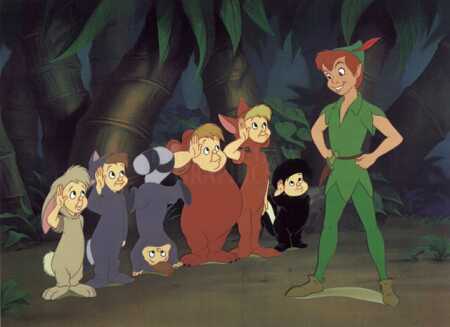
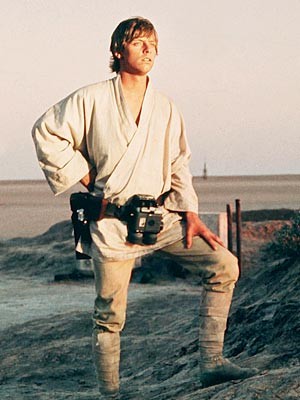
 Disney taught us that, “when you wish upon a star, your dreams come true.” Unfortunately, if your dream is to have both of your parents live to see you succeed, you’re sheer out of luck. In fact, of Disney’s forty full-length animated features from 1937 until 2000, I know of only one where the protagonist’s parents remain alive for the entire film.* Then there’s the fact that just about every super-powered hero is an orphan. If this isn’t bad enough, one or both of the hero’s adoptive parents often dies too! Superman lost his adoptive dad, Spider-Man lost his uncle, and Luke Skywalker lost both his aunt and uncle. With the Amazing Spider-Man movie set for release this summer, and that movie actually exploring the mysterious back-story about Peter Parker’s real parents, I thought it would be a good time to delve into the topic of why so many of our heroes—both super and animated—are orphans, and what the message means for all of us.
 In a New York Press article from August, 2011, film producer and director Tommy Pallotta, said, “I am a fan of audience participation, but I also think audiences like to be told a story. There’s this thing video game designers call a ‘golden path’—there’s a definite way that the majority of people are going to experience the game, and the designers plot that. A lot of the interactivity in a video game is really just the illusion of interactivity. It’s about engaging the audience and giving at least the feeling of volition. But as the artist you have the sense that you are, in some way, controlling it, blending the craft of storytelling with the illusion of agency.” In other words, in a game you think you are controlling the action, but really it’s already been pre-programmed. Kind of like what we think of as destiny. In fact, maybe that’s exactly what destiny is: the path we are meant to take in order to have the most fulfilling experience.
 By now you have no doubt heard that according to astronomers and anthropologists, December 21, 2012 correlates to the “end” of the Mayan calendar. And, despite having repeatedly heard about this for many, many years now, it is also very probable that you still have no idea exactly what this means. The reason is because it’s very complicated. To even begin to understand it you need to look to the Mayan myths of the Sacred Tree and understand their incredibly complex Long Count calendar of tuns, k’atuns, and b’aktuns as well as their concepts of the Great Cycle, the Great Great Cycle, and cycles within cycles. You’d also need to understand astronomical occurrences involving the precession of the equinoxes and the conjunction of the sun at the intersection of the plane of the ecliptic and the Milky Way. You can do all that, or, you can simply read my interpretation of this summer’s Green Lantern movie, which shares the same message as the Mayan mythology.
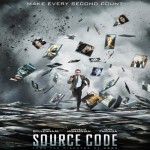 As mentioned in last quarter’s column, there have been a lot of “life-as-illusion” themed movies coming out lately. While I suspect that the success of Avatar and Lost are partly responsible for this trend, I think people’s fascination with 2012, drastic world changes, and a surge in our search for meaning are also fueling the recent string of films about alternate realities and simulated worlds. When airplanes are crashing into buildings, cities are submerged underwater, the Middle East is revolting, and the world economy is collapsing, real life almost seems more fantastical than our dreams. Jon Stewart summed it up perfectly at the 2008 Academy Awards: “Normally, when you see a black man or a woman president, an asteroid is about to hit the Statue of Liberty.” Yes, we are now officially living in the future, and we all know what kind of stuff happens in the future—exactly the kind of stuff that’s happening right now. But at least, thanks to Hollywood, we’ve been warned. And Hollywood’s heads up may even go much deeper than prophesies of events to come. They may help explain the reality we all find ourselves in.
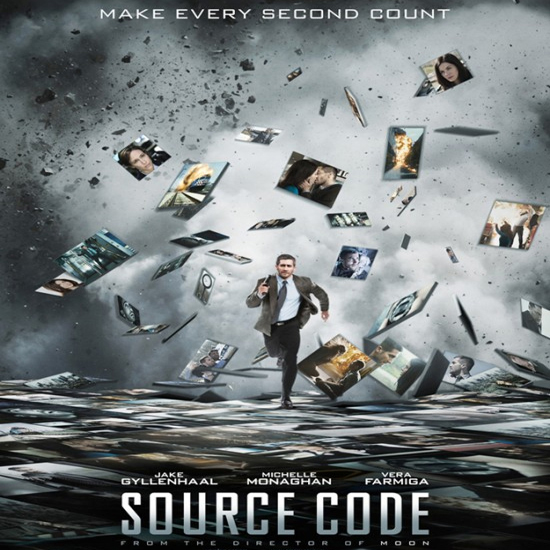
 There have been a lot of “life-as-illusion” themed movies coming out lately. We’ve had Avatar, Inception, and TRON: Legacy, and this month alone there’s The Adjustment Bureau, Limitless, Sucker Punch and Source Code. All these films share themes of alternate realities, questions about what is reality, and insight into powers that might be manipulating the reality we live in. While I hope to discuss the most recent batch of these films in an upcoming column, for now I’d like to bring up one that slipped past the radar of many moviegoers. This film actually gave me goose bumps when it revealed an angle that I’ve only recently adopted, and have never before seen in any other movie. That film is Disney’s Tangled.
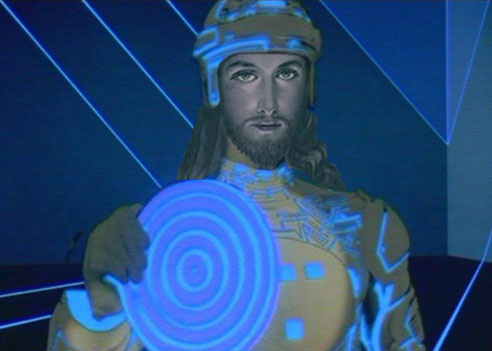
 In anticipation of TRON: Legacy, I recently re-watched a bunch of simulation-world films including The Thirteenth Floor, eXistenZ, and the original TRON, which I hadn’t seen in over twenty-five years. While I remember being somewhat confused watching the futuristic Disney film as a kid, seeing it again with new eyes, I was amazed at how clearly it expressed the “life as illusion” theme I’ve been so fascinated by as an adult. In the original movie, Jeff Bridges is considered a “user.” While Bridges often plays users in his films, in this case, it refers to a computer user who manipulates the scenarios of a digital world that is very similar to our own. In the original film, users are considered mythical, messianic figures who can help free the programs from the game they find themselves in. This got me thinking.
 Just like any story, your life story is filled with twists and turns, an array of interesting characters, moments of bliss and despair, of success and failure, of challenges that will help you grow, and questions that will cause you to wonder. Among the cast of characters there will be love-interests, villains, tricksters, mavericks and mentors. There will be many friends and enemies, and millions of extras. However, there will only be one hero. That hero, is you.
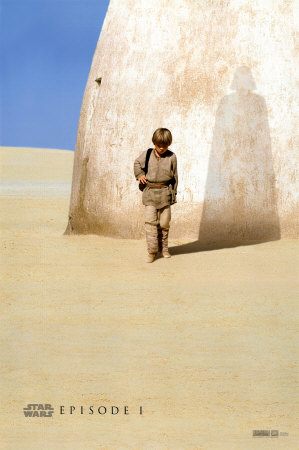
 I just watched what is quite possibly the most brilliant and hysterically funny movie review I’ve ever seen. This masterpiece critique was created by Mike of Red Letter Media and consists of seven parts that can all be viewed on YouTube. I highly recommend everyone viewing at least the first two parts of his videos, but it will not be necessary to understand what I’m about to say. His analysis brought to the forefront something that I’ve pushed down deep into my psyche for over ten years and am only now ready to release: The Phantom Menace is not only the biggest disappointment in movie history, it is also very likely completely responsible for screwing up our world’s history. Yes, I’m completely serious. Before I begin proving my point, let me begin with some facts that will be a little easier to swallow.
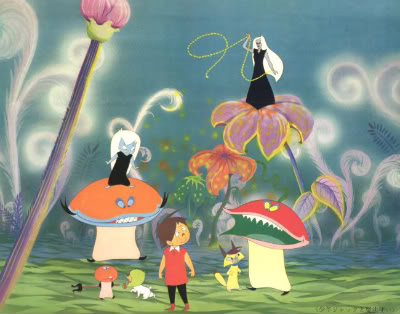 Have you ever tried to track down something you saw on TV as a kid, just to see if it was even real? Many of us are occasionally haunted by snippets of movies and shows we vaguely remember watching when we were children. We may wonder if these memories ever really happened, or if they were dreams. Especially when the memories seem incredibly bizarre! Having grown up in the 70s, I caught a LOT of psychedelic stuff on TV as a kid that I’ve become obsessed with tracking down as an adult. Why? Discovering forgotten moments from our youth is the closest thing we have to time travel. We get to relive an experience we had and to see what actually happened. Sometimes, we may even be shocked to find that the story from way back then provides an answer to our lives now.